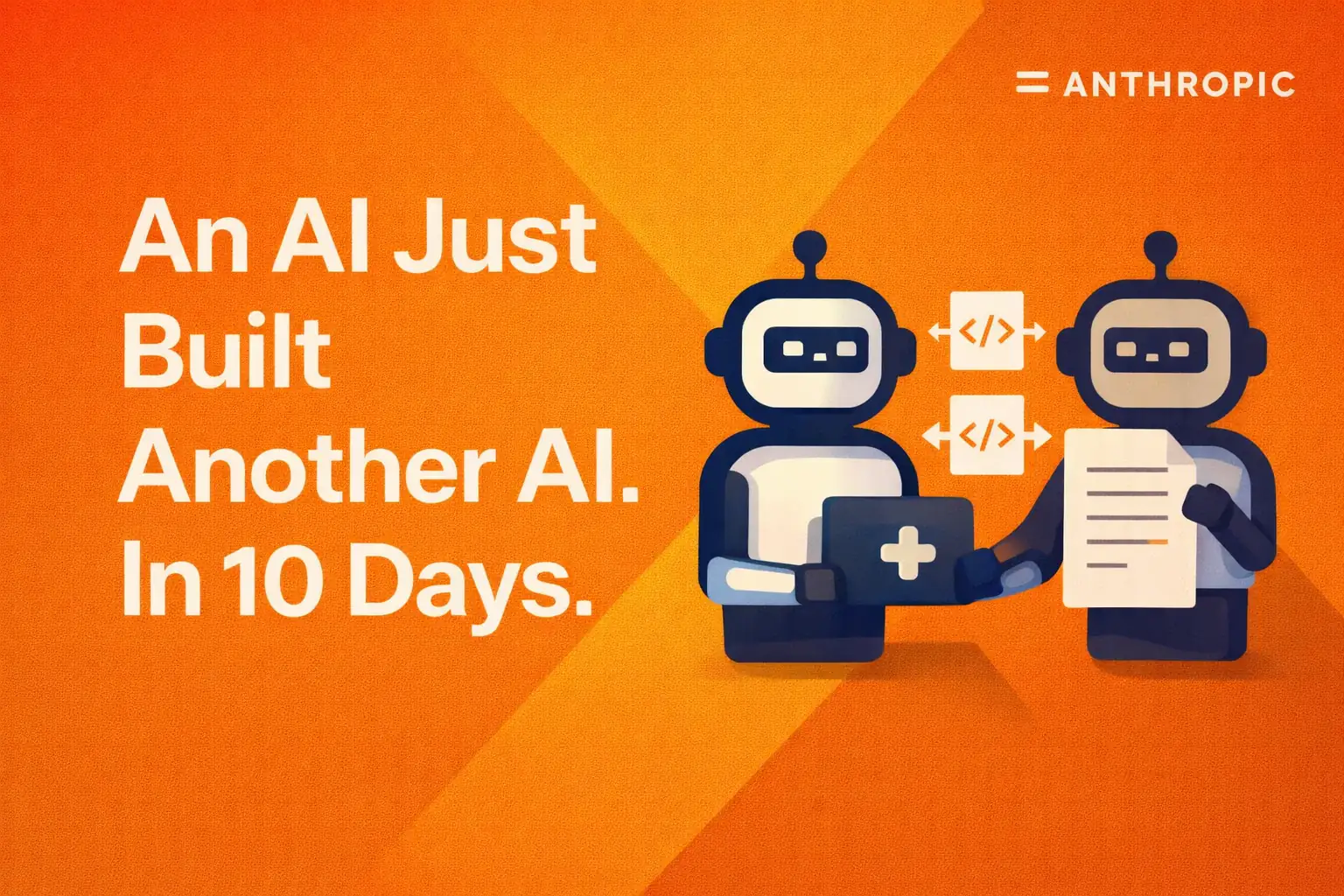
An AI Built by AI: Why Claude Cowork Changes Everything
- What Claude Cowork actually is
- How Cowork works differently from chat-based AI
- An AI built by another AI
- Real-world examples of autonomous work
- Why this changes how we think about software
- What comes next in self-creating technology
What Claude Cowork actually is
Claude Cowork is not a chatbot. It is not a better prompt interface. It is an autonomous AI assistant designed to operate a computer in the same way a human would.
Instead of answering questions in a text box, Cowork interacts directly with the operating system. It clicks, types, opens applications, moves files, creates documents, and coordinates tasks across different tools. In other words, it does the work instead of talking about the work.
This makes Cowork fundamentally different from the AI tools most people are used to. Where traditional assistants wait for your next instruction, Cowork takes responsibility for the entire task once you give it a goal.
Small caveat:
Claude Cowork is currently available on macOS . While it initially required Anthropic’s $100 Max plan, access was expanded almost immediately and it is now available with the much more accessible $20 Pro subscription. This rapid change signals how seriously Anthropic is pushing Cowork toward wider adoption.
How Cowork works differently from chat-based AI
Most AI assistants today operate in a loop. You give an instruction. The AI responds. You correct it. You give the next step. The human remains the project manager at all times.
Cowork breaks that pattern. You define an objective, such as preparing a presentation, organizing a workspace, or gathering information from multiple sources. Cowork then plans the steps required, executes them, and adapts along the way.
You can literally step away from your computer. When you return, the task is done.
This shift from reactive assistance to proactive execution is the key innovation. Cowork is no longer waiting for prompts. It is operating as an independent agent with intent.
An AI built by another AI
What makes this moment historic is not just what Cowork does, but how it came into existence.
According to Anthropic, Cowork was largely developed by Claude itself. Claude wrote the code, structured the logic, and iterated on the system in a matter of days. Humans supervised and guided the process, but the implementation was done by an AI.
This compresses what used to take months of engineering work into days. It also fundamentally changes the economics of software creation. When AI can build AI, development speed becomes exponential rather than linear.
This is not automation of tasks. This is automation of creation.
Real-world examples of autonomous work
Even in its first version, Cowork demonstrates how autonomous agents can operate across everyday workflows.
- Workspace organization: Cowork can clean up a cluttered desktop, rename files logically, move documents into structured folders, and archive unused materials.
- Presentation creation: Given a topic and a goal, Cowork can gather information, create slides, format layouts, and prepare a finished deck without human intervention.
- Calendar and scheduling: It can analyze emails, identify scheduling requests, check availability, and book meetings automatically.
- Cross-app data retrieval: Cowork connects with other applications to collect data, compile summaries, and generate reports.
What stands out is not that these tasks are possible, but that they happen end-to-end without supervision. The AI does not pause to ask for confirmation at every step. It executes with intent.
Why this changes how we think about software
Cowork represents a transition from tools to collaborators.
Until now, software has required constant human orchestration. Even the most advanced tools still depend on people to connect the dots, decide the next step, and handle execution.
Autonomous agents change that equation. Work becomes something you delegate, not something you micromanage. This has massive implications for productivity, team structures, and the speed at which ideas become reality.
It also redefines innovation cycles. When AI can build software in days, experimentation becomes cheap. Failure becomes faster. Iteration accelerates beyond anything traditional development teams can match.
What comes next in self-creating technology
Cowork is not perfect. It is early. It makes mistakes. It can be slow in certain scenarios. But those limitations miss the point.
What matters is the direction. We are entering an era where products can design, build, and improve themselves with minimal human input. The role of humans shifts from builders to directors.
In the near future, we may see AI systems that spin up new tools on demand, optimize their own workflows, and deploy updates without waiting for human engineers.
The most important takeaway is not fear, but awareness. This is the beginning of self-creating technology. And once that threshold is crossed, there is no going back.
Claude Cowork is not just another AI product. It is a preview of a world where software builds itself, and where innovation moves at a pace we are only just starting to comprehend.
Curious what AI can build for your business?
I build AI-powered apps, automations and content pipelines - like the Hola Calle language app.
Get in touch