Ray-Ban Meta Smart Glasses With Teleprompter: The Next Step in Wearable AI
- What the Ray-Ban Meta teleprompter actually is
- How it works in real-world scenarios
- Practical use cases for creators and professionals
- Business and productivity benefits
- Availability and rollout limitations
- Why this signals the future of wearable AI
What the Ray-Ban Meta teleprompter actually is
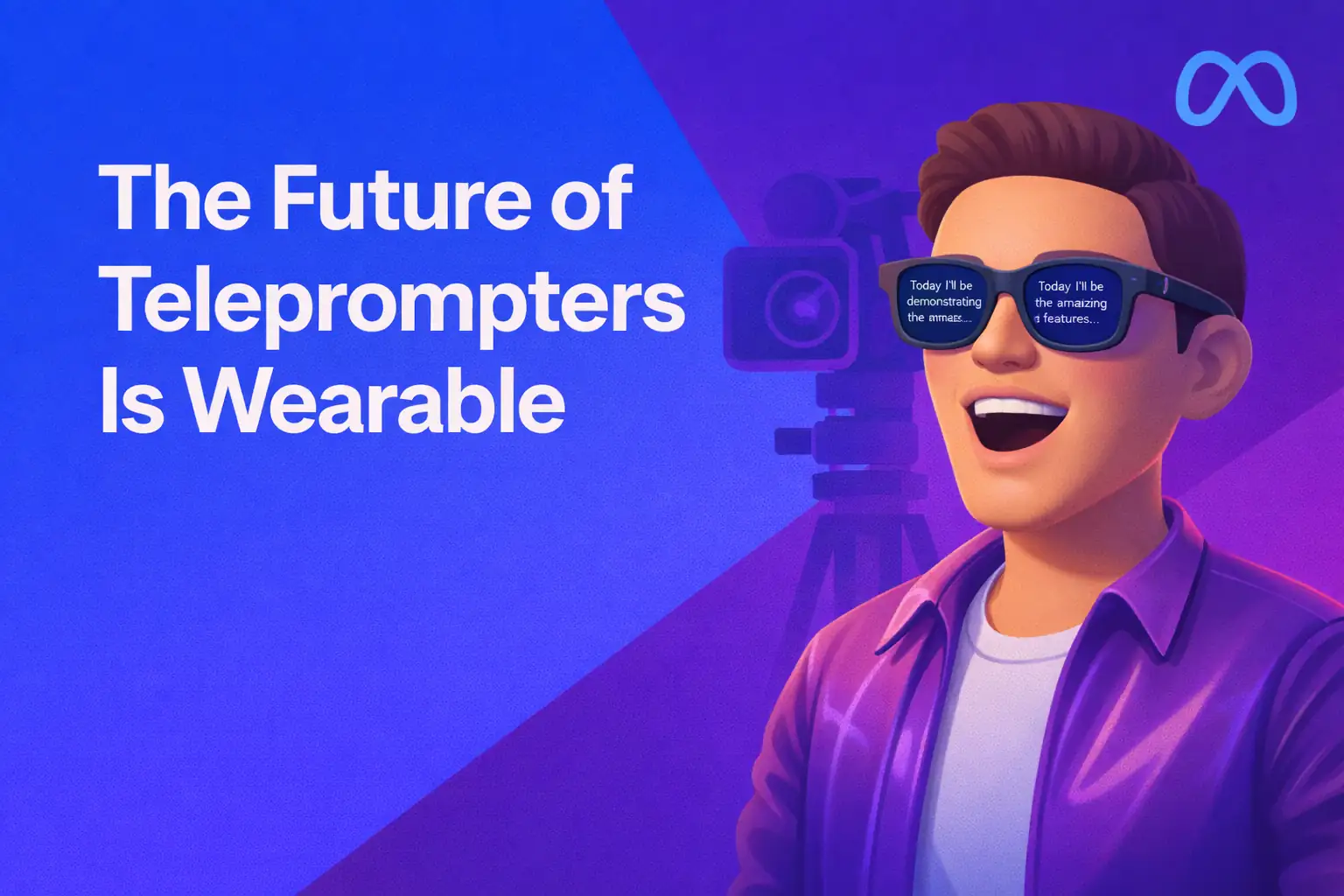
The Ray-Ban Meta smart glasses combine classic eyewear design with embedded AI capabilities. The new teleprompter feature allows users to view scripts directly within their field of vision while recording video or speaking live.
Instead of reading from a phone placed next to the camera, or memorizing lines in advance, the script appears subtly in front of your eyes. The result is natural eye contact, steady delivery, and a smoother recording experience.
This is especially important because audiences are highly sensitive to eye movement. Even small glances away from the camera can break trust or engagement. The teleprompter removes that problem entirely.
How it works in real-world scenarios
The teleprompter is designed to be hands-free and minimally intrusive. Scripts are loaded through Meta’s ecosystem and displayed in a way that does not obstruct normal vision.
In practice, the experience feels less like reading text and more like receiving gentle guidance while speaking. You can control pacing, pause naturally, and maintain conversational flow.
Typical scenarios include:
- Video recording: Reading a prepared script while looking directly at the camera lens.
- Live updates: Delivering talking points during live streams or presentations.
- Short-form content: Recording Reels, Shorts, or TikToks without stopping to check notes.
- Educational content: Explaining complex topics with structured guidance while staying visually engaged.
The key advantage is that the technology disappears into the background. You focus on communication, not on managing tools.
Practical use cases for creators and professionals
For content creators, this changes the entire recording workflow. Scripts no longer need to be memorized or taped next to a camera. Retakes caused by missed lines or broken eye contact are drastically reduced.
For founders and executives, the teleprompter makes it easier to communicate clearly in announcements, investor updates, or internal messages without sounding rehearsed.
Other concrete examples include:
- Marketing teams: Recording product explanations or campaign videos with consistent messaging.
- Sales professionals: Delivering personalized video pitches while maintaining a natural presence.
- Coaches and educators: Teaching from structured outlines without constantly referring to notes.
- Journalists and presenters: Reporting or narrating with accuracy and confidence.
What used to require studio setups or dedicated teleprompter hardware now fits into everyday eyewear.
Business and productivity benefits
From a business perspective, the value lies in speed, consistency, and reduced friction. Teams can produce higher-quality video content faster, without specialized equipment or extensive preparation.
This lowers the barrier to professional communication. Smaller teams and solo operators gain access to tools that were previously limited to studios and media organizations.
Key benefits include:
- Less time spent preparing and re-recording content
- More confident on-camera communication
- Consistent messaging across videos and channels
- Reduced dependency on external production tools
As video becomes the dominant format for communication and marketing, tools like this offer a clear competitive advantage.
Availability and rollout limitations
Despite the excitement, there is an important caveat. At the time of writing, availability of the Ray-Ban Meta smart glasses with teleprompter functionality is limited.
The initial rollout focuses on the United States and a small number of core markets. International availability has been partially put on hold due to supply constraints.
Demand has significantly outpaced production capacity, leading to delays outside the primary launch regions. While this may be frustrating for international users, it also sends a strong signal.
This is not a niche experiment. It is a product people clearly want, and one that Meta appears committed to scaling as manufacturing catches up.
Why this signals the future of wearable AI
The real importance of this launch goes beyond teleprompting. It shows how AI, wearables, and content creation are converging into a single, seamless experience.
Instead of pulling out devices, opening apps, and managing interfaces, intelligence moves closer to the human body. Workflows become more natural, more conversational, and less interrupted.
As supply expands and features evolve, smart glasses like these are likely to become standard tools for communication-heavy roles. The question is no longer whether wearable AI will become mainstream, but how quickly it will integrate into everyday work.
For those who regularly speak, teach, sell, or create on camera, this marks a meaningful step toward frictionless communication.
Curious what AI can build for your business?
I build AI-powered apps, automations and content pipelines - like the Hola Calle language app.
Get in touch